Alice
Hello, Neil. Have you been shopping?
Neil
Yes, I went a bit mad with my credit card actually.
Alice
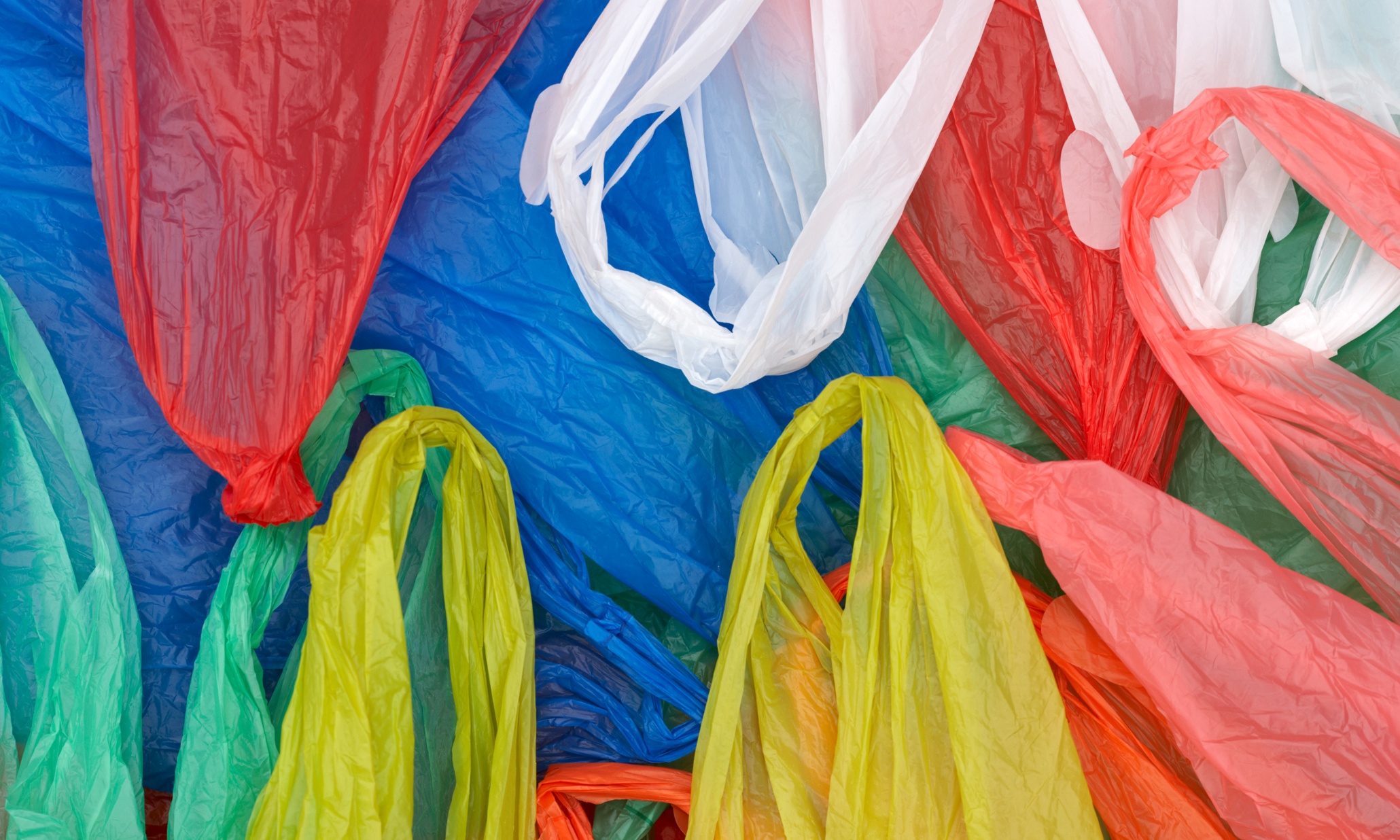
Gosh, I can see that! But look at all those plastic bags. Why don't you use your own bags?
Neil
You know what, I'm going to. Because they're now charging 5p per bag!
Alice
Don't you follow the news, Neil? It's a recent government initiative – which means a new plan for dealing with something – in this case, to cut the number of thin plastic bags being given away in shops. And the environmental impact of plastic is the subject of today's show.
Neil
Is England the first country to charge for these bags, Alice?
Alice
No – other countries in the UK started charging a few years ago. And countries around the world including Bangladesh, South Africa, China, and Italy have actually banned them altogether.
Neil
Interesting. But I don't throw my bags away, Alice. I put them under the kitchen sink.
Alice
Are you a hoarder, Neil? That means someone who collects large amounts of stuff and can't throw things away.
Neil
Maybe I am… But seriously, with the 5p charge I'm definitely going to recycle my plastic bags.
Alice
Good. Now let me ask you today's quiz question, Neil: How many tonnes of plastic rubbish from the UK is being sent to China each year for recycling? Is it:
a) 20,000?
b) 200,000?
or c) 2,000,000?
Neil
Well I think it's … a) 20,000.
Alice
We'll find out if you're right or wrong later on. But first, why are plastic bags bad for the environment?
Neil
Because they're too thin? And when they break all your shopping falls out? That must be it.
Alice
No. They take hundreds of years to decompose – or break down by natural chemical processes. And also people don't dispose of them properly. They litter our streets. They clog – or block – drains and sewers. They spoil the countryside and damage wildlife.
Neil
Well that's quite a list. So what's the solution then, Alice?
Alice
Well to either recycle or stop using plastic bags. But let's hear about the pharmaceutical company with another idea. This is BBC reporter John Maguire.
INSERT
John Maguire, BBC reporter
At this company laboratory in North London they're testing how bags made with a special additive break down when exposed to sunlight, oxygen and heat… The technology was discovered by a British scientist in the 1970s and is now sold to around half the world's countries. In some, biodegradable bags are backed by law.
Neil
And biodegradable means able to break down naturally in a way that isn't harmful to the environment.
Alice
So adding small amounts of a chemical to the plastic – a special additive – allows the plastic to break down in the open air. But if the technology was discovered back in the 1970s, why aren't these biodegradable bags being used in every country by now?
Neil
I have no idea, Alice. Maybe they aren't as strong as non-biodegradable bags. I like a good strong bag, myself, you see.
Alice
Alright. Well, just go and buy yourself some canvas bags, Neil! In fact, I'll get you some for your birthday.
Neil
Thank you.
Alice
You're very welcome. Now, moving on. Out of around 300 million tons of plastic produced every year, some goes in landfill – a place where our rubbish is buried under the earth – but about 10% of plastic ends up in the sea. Let's listen to Biologist Dr Pennie Lindeque from Plymouth Marine Laboratory talking about this.
INSERT
Biologist Dr Pennie Lindeque from Plymouth Marine Laboratory
We're already finding that there's a lot of microplastics in the sea and that some of these microplastics are actually being ingested by the zooplankton that live there. We're also concerned this could end up being passed up through the food chain to food which is destined for human consumption so it could end up on your or my plate.
Neil
What are microplastics, Alice?
Alice
They're small plastic fragments less than 5mm in size. You find them in cosmetic products such as facial scrubs, shower gel, and toothpaste.
Neil
And I'm guessing that ingested means 'eaten'?
Alice
Yes, the zooplankton – tiny little animals in the sea – mistake the microplastics for food and eat them. And because the zooplankton and humans are in the same food chain – they're at the bottom and we're at the top – but we're still connected – we may end up eating them and the microplastics inside them!
Neil
That doesn't sound very tasty! Now a food chain, by the way, refers to a series of living things where each creature feeds on the one below it in the chain.
Alice
Indeed. OK. Remember my question from earlier? I asked: How many tonnes of plastic rubbish from the UK is being sent to China each year for recycling? Is it…
a) 20,000?
b) 200,000?
or c) 2,000,000?
Neil
And I said a) 20,000.
Alice
Yes but you're wrong, I'm afraid. The answer is b) 200,000 tonnes. And that statistic comes from the University of Cambridge in the UK.
Neil
That's a load of rubbish! Get it – load of rubbish?
Alice
Very good.

Vocabulary
1. initiative
a new plan for dealing with something
2. hoarder
someone who collects large amounts of something and finds it hard to throw things away
3. decompose
gradually break down by natural chemical processes
4. clog
block something
5. biodegradable
able to break down naturally in a way that isn't harmful to the environment
6. additive
a small amount of a chemical added to something to improve it
7. landfill
a place where our rubbish is buried under the earth
8. microplastics
small plastic fragments less than 5mm in size
9. ingested
eaten
10 .zooplankton
tiny little animals in the sea other sea animals feed on
11. food chain
a series of living things where each group of creature feeds on the one below it in the chain
source: http://www.bbc.co.uk/learningenglish/english/features/6-minute-english/ep-151105

No comments:
Post a Comment